Showing posts with label Xiaomi. Show all posts

Tuesday, 22 December 2015

Motorola Moto G Turbo Edition: The most responsive Moto G yet

The smartphone market is always buzzing with new updates and launches. After reclaiming the position in the market with its Moto E and Moto G series, Motorola has been on a roll. This time they have come up with a new smartphone in the mid section – Moto G Turbo Edition. The phone was launched in the Indian market last week for INR 14,499 (USD 220 approx).

Similar to its predecessor, no new variations in the design

Turbo Editions’ body is 142.1X72.4X11.6 mm and weighs about 155g. The textured silica back cover has a premium feel, and the frame is made of plastic. The left side of the phone is clean and the volume button and a textured power button are placed on the right side. There is a standard Micro USB port at the bottom. Underneath the back cover there are two slots that hold Micro SIM cards and a slot to hold a Micro SD card at the top. The phone is available in two colours- black and white. The black phone has a bluish back panel. However, Motorola has provided back panel changing options in different colours on their website.

Standard HD display with TFT panel and Oleophobic screen

The device has a 5-inch display screen with a resolution of 720X1280p that has a pixel density of 294 PPI. Initial speculations about the device suggested a 1080p resolution. The LCD screen has a TFT panel which allows good visibility at odd angles and under bright sunlight. However, there are options available by brands like Xiaomi and Obi that offer a better display and screen experience at a lesser price. The screen has Gorilla Glass 3 panel that protects the HD Display. The oleophobic coating avoids smudges on the screen and keeps the display clean. Moto G Turbo Edition is IP67 rated that makes the device water-proof, provided the back-panel is properly closed.

New improved software allows ability to perform heavy tasks smoothly

As per Motorola, Moto G Turbo Edition is the fastest, most responsive Moto G yet as per Motorola and helps run the phone without stutter, with a 1.5 GHz Qualcomm Snapdragon Octa-core processor (615 chipset) and 2GB RAM. It runs on Adreno 405 GPU, so graphically intensive games are played with ease. Apart from this, Motorola G Turbo Edition has a 16 GB internal memory and comes with an SD card slot expandable up to 32GB which seems a bit limited for the given price. The OS runs on Android 5.1.1 Lollipop and is will soon receive and updated version 6 (Marshmallow).

Turbo charger for quick charging

The Turbo Edition has a turbo charger that promises up to 6 hours of battery life in 15 minutes. It has a non-removable 2470 mAh, battery that claims to give a full day backup. Although Asus, Xiaomi and Obi Worldphone are amongst the few brands that offer a higher battery capacity of up to 3000 mAh or more for a far lessees price.

Decent camera with dual LED flash

It has a 13 megapixel rear camera with auto focus and dual LED flash. The 5 megapixel front camera will help click that perfect selfie. You can tap anywhere on the screen to take a picture making it easier to take a selfie. Initial tests show an above average image quality. The camera also has features like Geo-tagging, face recognition and panorama view.

Conclusion

Motorola G Turbo Edition is a mid-range phone that has a water-proof and dust-resistant design. Among other features like 4G, Bluetooth and WIFI connectivity, the phone also has FM Radio. However, there is no new innovation in terms of design and also the fast processor is borrowed from Moto’s high end variant Moto X Play. The phone tries to impress but fails at multiple specifications like display, battery power, absence of a USB charging cable and the fact few companies offer better specifications at a lesser price. Priced at INR 14,499 (USD 220) the phone is available on Flipkart.
Continue Reading...

Monday, 30 November 2015

Obi Worldphone poses challenge to Xiaomi, Asus and Meizu

Obi Worldphone recently launched its flagship device Obi Worldphone SF1 in India through NDTV Gadgets 360. This device with its unique design stands out and is different from other available devices in the market. Considering the specifications and looks that this device carries it can give a tough competition to the existing smartphones such as Xiaomi Mi 4i, Asus ZenFone2 and Meizu M2 Note. Therefore, we decided to compare and see the four Android smartphones to find out on what all aspects Obi Worldphone can give competition to others.

Design and Build

The device that can easily fit into the palm is considered the best suit for its user. Looking at the specification chart, Xiaomi is comparatively lighter and slimmer. However, Obi Worldphone with its sleeker looking body and comparatively lesser weight can also deliver the same comfort like Xiaomi. Rest like Asus and Meizu seem big and heavy to hold.

Another fact that matters is the look. In this regard, Obi Worldphone simply stands out for its unique floating glass. Well, with this floating glass idea one can think that the display screen has the risk of breaking. Exactly at this point Obi impresses me more as they protect this stylish floating glass with extended metallic accent combined with the strength of the latest and strongest Corning Gorilla Glass 4. So, if protection is the major concern, then the device that appears more prone to breakage among all ends up giving maximum protection to its display.

Also, I find the power button and volume buttons more user friendly on Obi worldphone SF1. Amongst all, only Obi could gauge the need of heavy smartphone users who feel disturbed when they have to do all the tasks with their right hand including unlocking the screen or increasing the volume. So with Worldphone SF1 in hand, one can leave the unlocking job to the left thumb.


Display

The spec sheet above shows that Obi and Xiaomi have similar screen size, whereas Meizu and Asus have comparable screen sizes. All four smartphones have a comparable resolution, but the pixels per inch (PPI) is the highest in Obi SF1. More PPI in a 5 inch display screen makes Obi Worldphone stand out with a better visual quality.

UI

In this regard, each device has UI of its own. Asus comes with Asus Zen UI, Xiaomi have MIUI 6 on-board, Meizu offers Flyme 4.5 UI and Obi Worldphone presents Lifespeed UI. Well the UI of all the devices stands different from each other and have pro and cons of its own. But the UI of Obi Worldphone stands unique and different as it allows its user to reach the dialler and camera with a single swipe which is not a possibility with others.

Platform and Storage

On this front, Obi Worldphone and Xiaomi run on similar processor with a minor difference in the clock speed, whereas Meizu and Asus run on completely different processors. All the processors have plus and minus of their own. Furthermore, the Android version is similar in Meizu and Asus which is also outdated when compared to Obi and Xiaomi, as the later two offer the latest Android version.

On storage front, all the four Android smartphones are available in two variants, but Obi Worldphone seems to be at par as it offers 3GB RAM variant which the rest do not give. Also, Xiaomi misses out to give expansion facility.

Camera and Battery

Considering the megapixels offered by all four smartphones, they appear equally powerful. But the differentiator here is the camera features of Obi SF1 that make its camera more powerful in comparison with others. Features such as Opti Zoom, Chroma Flash and UBI Focus make the images more creative, clean, and beautiful. These features are missing in the other devices. However, the others do offer basic features like HDR, face detection, beautify etc.

On the battery front, all the four offer comparable power. Hence, none of these devices will run out of battery before the day ends. However, with Obi Worldphone SF1, charging the device is also not a pain as the company offers quick charge feature that can re- energize the device in a lesser time.

Final statement

Obi Worldphone SF1 is different from the rest with its unique design, CGG4 protection, better visual quality, camera features and quick charge feature. This way Obi Worldphone gives a tough competition to Xiaomi Mi 4i and races ahead of Meizu and Asus on almost all the aspects. Looking at the price tag, all the four devices cost between INR 10000 – INR 12000. Within this range Obi Worldphone sounds a better deal.
Continue Reading...

Monday, 21 September 2015

Xiaomi Announced the Launch of Mi 4C

Early this year, Xiaomi launched its Mi 4i which was the successor to the Mi 4. Immediately after the release, news were flooding that the China-based smartphone maker would unveil the Mi 5 at its August 5 event. In any case, the date was focused on the official dispatch of the MIUI 7 interface. But now the Chinese smartphone maker has announced that they will unveil its Xiaomi Mi 4C on September 22, 2015. Based on the buzz, this smartphone is likely to be a little advanced version of Xiaomi Mi 4i that was launched in India early this year. Based on what we have heard so far, Mi 4C will be sold in China only. But this may change in the near future. According to TEENA certification, that it has already received, Mi 4C will look identical to Xiaomi Mi 4i in looks and will have same dimensions.


Moreover, Mi 4C will include dual SIM-card slots allowing users to insert LTE-enabled SIM-cards. This feature is similar to the Mi 4i that allow users access LTE networks with both SIM-cards. The new things it will bring to the table are all mere guesses that is going around the device. As per a TechGrapple report, that quotes Xiaomi's co-founder Lin Bin (on Weibo), another key aspect is the Xiaomi Mi 4C will be powered by a Qualcomm Snapdragon 808 SoC and offers Adreno GPU to complement the processor.

Furthermore, the device is expected have two variants 2 GB RAM with 16GB ROM and 3GB RAM with 32GB ROM. Another guess around the device is it may have 64 GB variant too but how much RAM it will have is still a mystery. Buzz around the device reveals that it might have same internals as Mi 4i. Mi 4C may come with 5 inch 1080p touchscreen, 13 MP rear and 5 MP front camera, LTE support with 3120 mAh battery.

Unlike Mi 4i, the Mi 4c will run on Android 5.1.1 Lollipop underneath Xiaomi’s own MIUI 7 user interface. The handset would also feature a USB Type-C port. The device may cost around CNY 1,499, which is about $235 or €207 at the current exchange rates.
Continue Reading...

Saturday, 18 July 2015

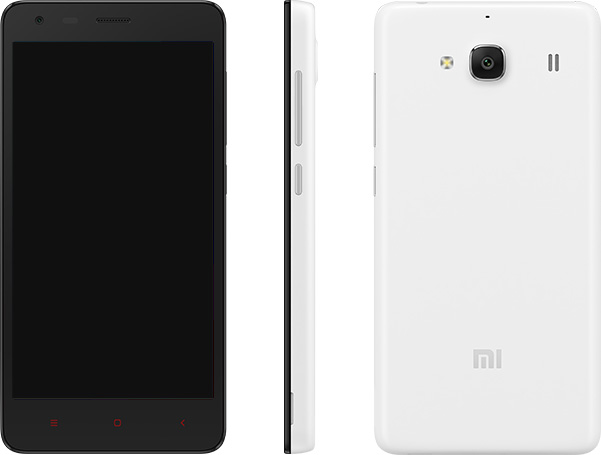
Lenovo A6000 Plus Surpasses Xiaomi Redmi 2

Lenovo, the Chinese company, entered the smartphone business few years back and has already made a mark. It is particularly appreciated for its consistency in improving its devices. On the other hand, another Chinese company, Xiaomi is known for introducing technological advancement in its smartphones. As per IDC, the two companies hold top positions in the global smartphone industry: Xiaomi holds third position whereas Lenovo fourth. Therefore, we have decided to compare the two models from these companies, Lenovo A6000 Plus and Xiaomi Redmi 2, priced about the same, to see how they are trying to outdo each other.


Let us focus on design aspects of the two devices first. Lenovo A6000 Plus measures 141x70x8.2mm and weighs 128g, where as Xiaomi Redmi2 measures 134x67.2x9.4mm and weighs 133g. This makes Lenovo's device somewhat larger however lighter in weight than Redmi 2 which is although small in size yet weighs more. Also, A6000Plus is pleasing to eyes as its body is made up of polycarbonate. Redmi, on the other hand,utilizes finely textured and matte-showered back cover that feels extraordinary, and is also oil and mark safe. Moreover, while Lenovo Plus comes in black that guarantees to never escape from fashion, Redmi 2 is accessible in numerous shading variations including slick dark, white, yellow,pink and green.


On the display front, we find that Lenovo’s Plus 5inch screen is slightly larger than 4.7inch screen of a bigger display screen size gives Lenovo a slight leg up over Redmi 2. Xiaomi Redmi2. Nonetheless, both the gadgets have capacitive touchscreen and produce 720x1280 pixels resolution and fairly similar pixel thickness that is 312 pixels per inch for Redmi 2 and 294 pixels per inch for Lenovo. In general, while the excellence of visuals may be just about the same in both the gadgets.
Both the gadgets are power-driven by 1.2 GHz Quad-Core processors; however Lenovo A6000Plus has a clear leg up over Xiaomi Redmi2 on three checks, i.e. operating system, RAM and storage. Firstly, A6000Plus operates on Android 4.4.4 OS where as Redmi 2 functions on a slightly older version Android 4.4 OS. Besides, Lenovo accompanies 2GB RAM, which is twofold of Redmi2 that has 1GB RAM. Thirdly, with its 16GB inbuilt storage expandable to 32GB, Lenovo is obviously in front of Xiaomi that accompanies 8GB inbuilt storage expandable to 16GB. Moreover, while Xiaomi Redmi2, with its skin MIUI6, permits you to find new capacities, easy routes, customizations and liveliness, Lenovo offers comparative potential outcomes with its VIBE 2.0. In general, Lenovo A6000 Plus is moderately better to make applications run smoother with decreased time hold-up and give general quality of user interface and experience.


Other than Internet searching, messaging, application downloading and gaming, progressively the photography has turned into an essential piece of smartphone. Both Lenovo and Xiaomi comprehend this perspective, especially the developing pattern of selfies. Both the gadgets are practically identical on the camera astonishingly, with 8 megapixel essential (Rear) cameras and 2 megapixel optional (Front) cameras with flash. Besides, another significant indicator is the battery limit. On this check, Lenovo A6000 Plus, with its 2300mAh battery limit, is marginally more dependable in correlation to Xiaomi Redmi 2 that accompanies 2200 mAh battery limit. Different features like Wi-Fi, Bluetooth, GPS, FM and so forth are all accessible in both the gadgets. As far as network, both gadgets are accessible in 3G and 4G relying upon the market.

Based on specifications, we note that Lenovo A6000 Plus steals the show from Xiaomi Redmi 2 on account of its bigger screen-size, more advanced OS, greater RAM, bigger inbuilt and expansion capacity and marginally higher battery limit. There are unmistakable outline components as well, which incorporate general size, shape and shading variations that are a matter of individual inclination. On the e-commerce websites like Flipkart, Amazon and Snapdeal, both he devices are marked at around INR7,000. As such, Lenovo A6000 Plus clearly makes a more sensible choice.
Continue Reading...

Followers

Follow Me

Follow The Author